
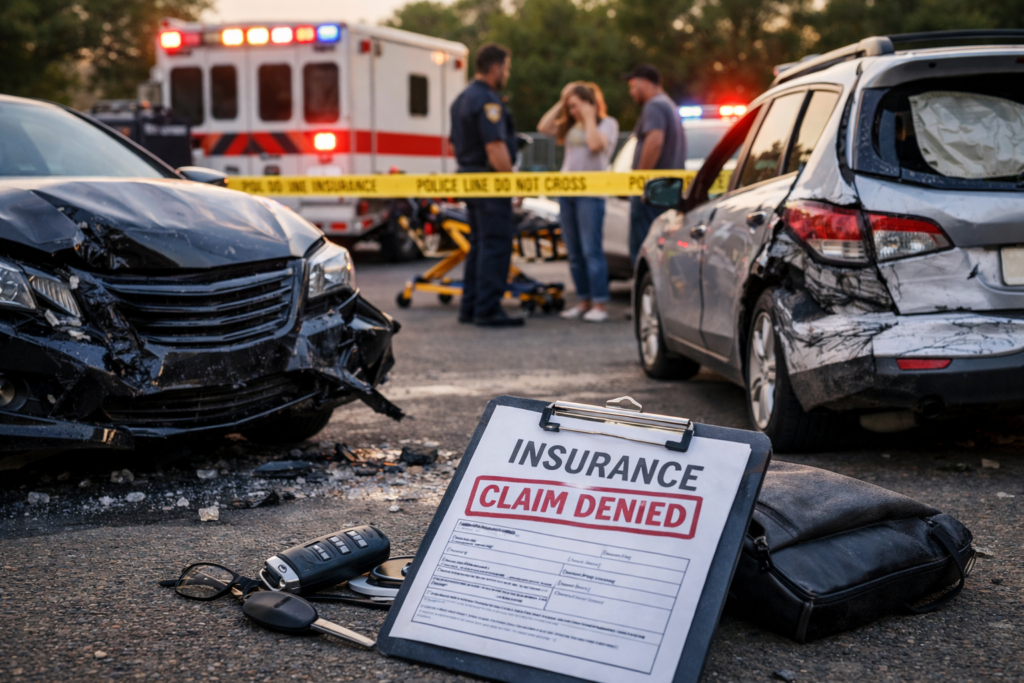
Most drivers assume that insurance is a given. If someone causes a crash, their insurance steps in, damages are handled, and life slowly returns to normal. That belief is so widespread that people rarely question it.
The reality is different.
When the at-fault driver has no insurance, the system most people rely on simply does not activate. The responsibility still exists, but the mechanism that turns responsibility into compensation is gone. What follows is not just an inconvenience, but a structural problem most drivers are unprepared for.
This situation is far more common than people realize.
How Common Uninsured Drivers Really Are
According to data from the Insurance Research Council, approximately 15 percent of drivers nationwide are uninsured, and an additional 18 percent are underinsured, meaning their coverage limits are too low to cover serious crashes.
Combined, roughly one in three drivers on the road cannot fully compensate you if they cause an accident.
Uninsured rates are especially high in certain states, including Mississippi, New Mexico, Michigan, and Tennessee, while states like Maine, New York, and Massachusetts report lower rates. Rising insurance costs have only worsened the problem. As premiums increased sharply over recent years, many drivers made difficult financial decisions, choosing to go without coverage entirely.
This is not reckless behavior in every case. For many, it is economic reality. But the impact on victims is the same.
Why Fault Alone Is Not Enough
When an insured driver causes a crash, the process follows a familiar path. An insurance company accepts responsibility, investigates the incident, evaluates damages, and negotiates payment.
When the at-fault driver is uninsured, that structure disappears.
There is no company to investigate the claim. No adjuster assigned to assess damage. No settlement process. Fault may be clear, but without insurance backing it, there is no automatic way to convert harm into compensation.
Legal responsibility without financial backing has limits.
The Role Uninsured Motorist Coverage Plays
Uninsured motorist coverage exists specifically to address this gap. It allows an injured driver to file a claim through their own insurance when the at-fault driver has no coverage.
With uninsured motorist coverage in place, the process regains structure. Medical treatment can move forward. Vehicle repairs can be addressed. Claims are handled through familiar channels, with timelines and legal protections.
Without it, options narrow quickly.
What Happens Without Uninsured Motorist Coverage
When uninsured motorist coverage is not available, injured drivers are often left managing costs themselves while trying to determine whether recovery is even possible.
Medical bills arrive immediately. Vehicle repairs may be delayed or paid out of pocket. Lost wages often go uncompensated. Other coverage, such as health insurance, collision, or MedPay, may help in limited ways, but they do not address the full scope of damages, including pain, suffering, or long-term impairment.
At that point, the only remaining option may be legal action against the at-fault driver personally.
The Reality of Suing an Uninsured Driver
While it is legally possible to sue an uninsured at-fault driver, the outcome is often disappointing. Many uninsured drivers lack sufficient income or assets to satisfy a judgment. Even a successful lawsuit does not guarantee meaningful recovery.
Collection efforts can take years and may result in minimal payment, if any. Legal responsibility does not automatically translate into financial ability.
Why Documentation Becomes Essential
In uninsured-driver crashes, documentation carries more weight than in almost any other scenario. Without an insurance company on the other side acknowledging responsibility, proof becomes everything.
Police reports establish an official account. Photographs preserve details that cannot be recreated. Witness statements add credibility. Medical records create a timeline linking injury to the crash.
Missing documentation weakens leverage and limits options.
Medical Care Should Never Be Delayed
One of the most damaging mistakes after an uninsured-driver crash is delaying medical treatment due to cost concerns. Injuries often do not present immediately, and delays raise doubts about causation.
Medical records are not just about treatment. They are evidence. Early evaluation protects both health and legal standing. Payment concerns can be addressed later. Documentation cannot be recreated.
How Drivers Can Protect Themselves
Protection against uninsured drivers begins before a crash occurs.
Carrying adequate uninsured and underinsured motorist coverage.
Adding MedPay or PIP to cover immediate medical costs.
Maintaining collision coverage if a vehicle has value.
Installing a dash cam to preserve objective evidence.
Understanding policy limits and exclusions ahead of time.
These steps are not about expecting the worst. They are about acknowledging the realities of the road.
What This Ultimately Comes Down To
When the at-fault driver has no insurance, fault alone does not protect you. Recovery depends on preparation, documentation, and coverage that can step in when the other side cannot.
Understanding how these situations actually work allows drivers to respond with clarity instead of shock.
Freddie’s Final Word
Uninsured-driver crashes expose a hard truth about the system: responsibility without coverage has limits. Drivers who understand this reality are better equipped to protect themselves, their families, and their futures when the unexpected happens. Freddie Fender exists to explain how the road actually works, not how people assume it does.
Freddie Fender Investigates
Guidance when the system stops making sense.