
For most drivers, something feels different.
The roads feel tighter.
Drivers feel more aggressive.
Insurance bills feel outrageous.
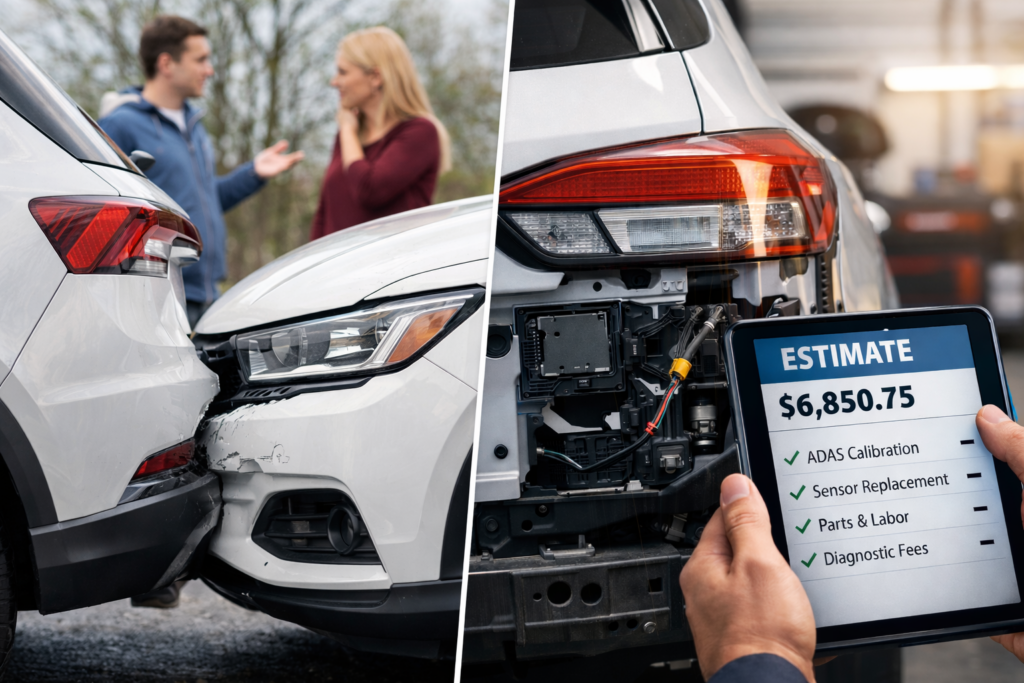
And a simple fender bender suddenly looks like a five-figure disaster.
So what’s actually happening?
Are we living in a new era of dangerous driving — or are we simply living in an era where accidents cost more than ever before?
The answer is uncomfortable.
It’s both — but not in the way most people think.
The Data: Are Roads Actually More Dangerous?
Let’s start with reality.
According to the National Highway Traffic Safety Administration (NHTSA), traffic fatalities surged during the pandemic years. 2021 marked one of the highest fatality totals in over a decade. The spike shocked safety analysts because fewer people were driving at the time.
Why?
Higher speeds.
Riskier behavior.
Less enforcement during lockdown periods.
Since then, fatality numbers have gradually declined — but they have not fully returned to pre-2020 levels.
So yes — driving became measurably more dangerous in the early 2020s.
But here’s the twist:
Modern vehicles are objectively safer than ever.
- Advanced airbags
- Blind-spot monitoring
- Automatic emergency braking
- Lane-keeping systems
- Forward collision warning
- Electronic stability control
Crash survivability has improved dramatically compared to vehicles from the early 2000s.
So if cars are safer…
Why does everything feel worse?
Why Driving Feels More Tense
Part of it is behavioral.
Post-pandemic driving patterns changed. Studies showed increases in speeding and reckless driving even as traffic returned to normal levels. Social scientists have pointed to stress, distraction, and declining patience as contributing factors.
Then there’s vehicle size.
SUVs and trucks dominate the road now. Heavier vehicles increase crash severity — especially for smaller cars and pedestrians. Electric vehicles, while environmentally beneficial, also introduce instant torque acceleration, which can magnify the force of impact in certain situations.
And distraction hasn’t improved.
Despite hands-free laws, smartphones remain one of the leading contributors to crash risk. The difference now? Drivers are juggling navigation, streaming, messaging, and infotainment systems — often simultaneously.
It’s not that roads turned into chaos overnight.
It’s that the margin for error shrank.
The Financial Explosion No One Talks About
Here’s where the real shift happened.
Accidents didn’t just become crashes.
They became invoices.
The average new vehicle now costs well over $45,000. Even used cars have climbed significantly in price since 2020 due to supply chain disruptions and semiconductor shortages.
And repairs?
Modern vehicles are packed with sensors.
A minor bumper tap can require:
- Radar recalibration
- Camera alignment
- Lane assist recalibration
- ADAS system diagnostics
What used to be a $1,200 repair can now be $6,000–$10,000 — without structural damage.
Insurance companies are paying more per claim than they did five years ago. Labor costs have increased. Parts are more expensive. Medical billing has inflated.
So premiums rise.
And when premiums rise, some drivers drop coverage.
Which increases uninsured motorist exposure.
Which increases payouts.
Which raises premiums again.
It’s a cycle.
And it’s accelerating.
So Is Driving More Dangerous — Or Just More Expensive?
Here’s the honest answer:
Driving isn’t dramatically more fatal than it was a decade ago.
But the financial consequences of a crash are exponentially higher.
That’s the real shift.
A minor accident can now:
- Trigger five-figure repair bills
- Expose policy limit problems
- Raise premiums for years
- Create uninsured motorist complications
- Lead to extended legal disputes
It’s not necessarily that roads became apocalyptic.
It’s that the stakes became nuclear.
The Legal and Insurance Layer
Insurance carriers operate on math.
Higher claim payouts lead to higher premiums. When claims become more expensive — even if accident frequency stays stable — the entire system recalibrates.
At the same time:
- Medical costs continue rising.
- Litigation remains common.
- Policy limits often remain outdated.
Many drivers still carry liability limits designed for 2008 vehicle prices.
In 2026 economics, that’s a dangerous mismatch.
The Bigger Cultural Question
There’s also something else happening.
Driving used to feel routine.
Now it feels strategic.
People are more aware of liability.
More aware of uninsured drivers.
More aware of how one mistake can ripple financially for years.
It’s not just about safety.
It’s about exposure.
What Smart Drivers Should Be Thinking About Now
If accidents are financially amplified, preparation matters more.
Drivers should be asking:
- Are my liability limits realistic for today’s vehicle values?
- Do I have uninsured/underinsured motorist coverage?
- Do I understand how my deductible interacts with rising repair costs?
- Do I know what happens if sensors or ADAS systems fail?
The road may not be drastically more violent.
But it is far more expensive.
And that changes everything.
The Bottom Line
Driving hasn’t entered a dystopian era.
But it has entered a high-cost era.
Technology improved survivability.
Behavior shifted.
Repair complexity exploded.
Insurance economics tightened.
So the question isn’t whether driving is more dangerous.
The question is whether drivers are financially prepared for what modern accidents actually cost.
Freddie Fender Investigates
We don’t just look at crashes.
We look at exposure.
Because in today’s environment, the difference between “just a fender bender” and a long-term financial headache isn’t always the impact.
It’s the aftermath.
And smart drivers prepare for the aftermath before it happens.